APRIL 2011 HISTORY

Scanning the Past: A History of Electrical Engineering from the Past
Submitted by Marc Bell, Editor

Copyright 1997 IEEE. Reprinted with permission from the IEEE publication, “Scanning the Past” which covers a reprint of an article appearing in the Proceedings of the IEEE Vol. 85, No. 3, March 1997.

Lee de Forest and the Amplifying Audion

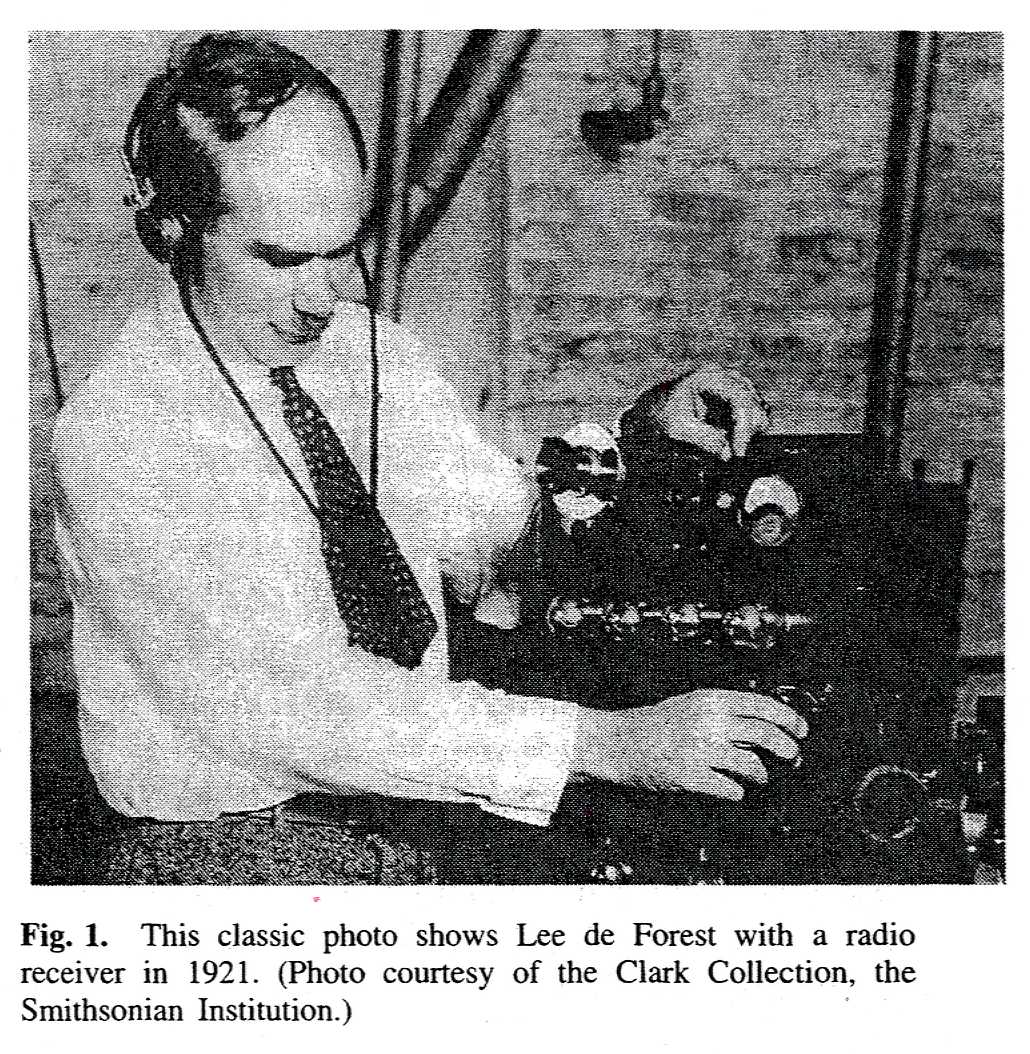
      Seventy-five years ago this month, the INSTITUTE OF RADIO ENGINEERS (IRE) awarded its Medal of Honor to Lee de Forest as recognition for his invention of the three-electrode amplifier and his other contributions to radio. In 1946 he received the Edison Medal of the American Institute of Electrical Engineers (AIEE) and the citation mentioned the profound technical and social consequences of the grid-controlled vacuum tube which he had intro¬duced. img018.jpgKnown for having a rather flamboyant personality, de Forest (shown in Fig. 1) was both an entrepreneur and a prolific inventor who received more than 300 patents.
     De Forest was born in Council Bluffs, IA, in 1873, the son of a Congregational minister. In 1879, the family moved to Talladega, AL, where his father served as president of Talladega College. After attending a college preparatory school in Massachusetts for two years, de Forest enrolled at the Sheffield Scientific School at Yale University in 1893, where he graduated in 1896. He went on to earn a doctoral degree from Yale in 1899 with a dissertation on standing waves produced by Hertzian waves on an open-ended transmission line. His first employment after college was in the Dynamo Department of the Western Electric Company in Chicago. He experimented with wireless communication in his spare time and developed a device he called a responder as an alternative to the coherer as a detector of wireless waves. He left Western Electric in 1901 and worked as an editor for the Western Electrician and as a part-time (more…)

IEEE NEWS

NEWS from IEEE-USA
2001 L Street, N.W., Suite 700
Washington, DC 20036-4910

Call for Grant Applications

The IEEE Foundation accepts grant applications from charitable organizations, for new and innovative projects in January, April and September. The next date for grant applications is 22 April. Please submit your grant application using the online form.

Grant Applications are reviewed by a committee of the IEEE Foundation Board of Directors or the IEEE Life Members Committee. Approval of grants and funding arrangements are announced within one month of each IEEE Foundation Board meeting or IEEE Life Members Committee meeting. Please submit your grant application using the online form.
 
The IEEE Foundation considers projects that:
1. Use technology for humanitarian causes
2. Improve math, science and technology education from pre-college through continuing education
3. Introduce pre-college students to engineering and science
4. Support professional development and conference participation for university students
5. Preserve and promote the history of IEEE associated technologies
6. Recognize major contributions to IEEE associated technologies. 
Please review the IEEE Foundation’s grant guidelines and direct your questions to foundation-office@ieee.org.

IEEE Global Humanitarian Technology Conference Issues Call for Papers

WASHINGTON (11 March 2011) — IEEE Global Humanitarian Technology Conference organizers are seeking technical and non-technical papers on topics related to the role technology can play in improving lives and creating business opportunities for people in emerging nations.

Accepted papers will be presented during the inaugural conference, 30 October — 1 November 2011, at the Renaissance Seattle Hotel. They will also be published in conference (more…)

MARCH 2011 SECTION MEETING INFORMATION

MARCH MEETING
Cognitive Radio Technology

DATE: Thursday, March 24, 2011
PLACE : Raffel’s – 10160 Reading Road (see below for directions)
TIME : 5:30 p.m. to 6:00 p.m. –  Social Time
6:00 p.m. to 7:00 p.m. –  Dinner
7:00 p.m. to 8:30 p.m. –  Presentation
COST:   $12- $20, See information in Reservations

MENU SELECTIONS:   Buffet Menu: BBQ’d Ribs, Marinated Char Grilled Chicken Breast, Au Gratin Potatoes, Steamed Fresh Broccoli, Cole Slaw, Tossed Salad, Dinner Rolls and Butter.   There is also a bar available for the purchase of alcoholic drinks.

LOCATION:  Raffel’s is located at 10160 Reading Road, south of Glendale-Milford Road on the east side of Reading. Take I-75 to the Glendale-Milford Rd. Exit, go east on Glendale-Milford Road approximately ¾ of a mile to Reading Rd. and turn right on Reading.

RESERVATIONS:  (Please note New Procedure) New on-line reservation system.  Please make reservations for this meeting by going to: Cognitive Radio Technology meeting .  You may pay on-line via PayPal, or by cash or check at the door.

On-line dinner reservation: $12.00 (member), $15.00 (non-member).

All dinner reservations close at noon on March 22, 2011.

Walk-in dinner rate (i.e. no reservation): $15.00 (member), $20.00 (non-member).  No guarantee that meals will be available for walk-ins.  Cash or check only.  Valid IEEE Membership card required for member rate.

** You are welcome to attend this meetings without purchasing dinner – Registration is requested**

Voice Mail reservations have been eliminated.

PE CREDITS:  Depending on the subject matter, attendance at IEEE Cincinnati Section Meetings now qualifies the attendee for Professional Development Hours towards renewal of Professional Engineers Licenses. Required documentation will be available following the meeting!  The Section Meetings also provide a great opportunity to network with fellow engineers in the area.

ABOUT THE MEETING:
The Cincinnati Chapter of the IEEE is proud to offer a presentation of the state of the art in Cognitive Radio Technology by two leading experts in the field, Dr. James Neel, President and co-founder of Cognitive Radio Technologies (CRT), and David Maldonado, Business Development manager at L-3 Nova Engineering. This emerging technology is having a profound effect on the way radios and frequency spectrum will be used in the future. Both gentleman are graduates of Virginia Tech, a pioneering institution in cognitive radio technologies.

From Wikipedia: “Cognitive radio is a paradigm for wireless communication in which either a network or a wireless node changes its transmission or reception parameters to communicate efficiently avoiding interference with licensed or unlicensed users. This alteration of parameters is based on the active monitoring of several factors in the external and internal radio environment, such as radio frequency spectrum, user  behavior and network state.
The idea of cognitive radio was first presented officially by Joseph Mitola III in a seminar at KTH, The Royal Institute of Technology, in 1998, published later in an article by Mitola and Gerald Q. Maguire, Jr in 1999.[1] It was a novel approach in wireless communications that Mitola later described as:
The point in which wireless personal digital assistants (PDAs) and the related networks are sufficiently computationally intelligent about radio resources and related computer-to-computer communications to detect user communications needs as a function of use context, and to provide radio resources and wireless services most appropriate to those needs.[2]
It was thought of as an ideal goal towards which a software-defined radio platform should evolve: a fully reconfigurable wireless black-box that automatically changes its communication variables in response to network and user demands.”

ABOUT THE PRESENTERS:
Dr. James Neel is the President of Cognitive Radio Technologies, which he founded in 2007 with Dr. Jeff Reed to commercialize cognitive radio research from Virginia Tech. The leading small business for incorporating artificial intelligence into wireless networks with three SBIRs on cognitive spectrum management and contracts on topics ranging from applying behavioral learning to detecting the intention of wireless networks to rapidly deployable networks for disaster responses. Dr Neel is the Chair of the Cognitive Radio Work Group in the Wireless Innovation Forum (formerly the SDR Forum), and has received three paper awards for the design of cognitive radio networks.

Mr. David Maldonado is currently the Manager of the Advanced Programs and New Technologies Development Group at L-3 Nova Engineering.  In addition, Mr. Maldonado is part of the Business Development group.  In his combined role, Mr. Maldonado is responsible for identifying new technologies and emerging markets of business development. He is also part of the company’s Internal Research and Development (IRAD) selection committee.  It is in this capacity that Mr. Maldonado has participated in the system engineering of various next generation SDR-based communications systems and supported integration, test and evaluation of Cognitive Radio algorithms into the company’s product offerings. Mr. Maldonado has also contributed to the creation of a tightly integrated development process between the modeling, simulation and hardware development teams to ensure a successful and more effective transition of innovations to deployable systems. Much of this work has been integral to L-3 Nova Engineering’s maturation, rapid integration and transition of technologies developed in conjunction with Small Business and University partners directly impacting DoD developments such as the JTRS WNW waveform program.

Mr. Maldonado obtained his MS from Virginia Tech (VT) where he is currently working on his PhD degree. As part of his work, Mr. Maldonado was one of the pioneers of the Center for Wireless Telecommunications (CWT) Cognitive Engine (CE) at VT. He has been part of Cognitive Radio developments since its inception and an active participant of the Wireless Innovation Forum (formerly the SDR Forum) Cognitive Radio Working Group where he held Vice-Chair and Chair positions.

Prior to Joining L-3 Nova Engineering, Mr. Maldonado held a District Sales Manager position at Anritsu Company as part of their wireless Test and Measurement (T&M) group where he served as a liaison between Sales, Marketing and Engineering groups. Mr. Maldonado’s career in advanced wireless development started in the commercial arena as an RF engineer of Ericsson’s Mobile Handset R&D group.

MEMBERSHIP NEWS

NEW MEMBERS

The following individuals are IEEE members who are new to our Section:

Guthrie Briggs
Chris Butler
Casandra Cox
Andrew Daniel
Tobias Derdorff
John Dwyer
Chris Edwards
Jeffrey Gruseck
Alexander Jones 
Matthew Myers
Kevin Penn
Anthony Sargent
Michaela Scheifer
Aaron Seidel
Alander Squire
Xinyu Sun
Gregory Watson
We wish to welcome these members to the Cincinnati Section!!!

 If you are interested in upgrading your membership to Senior Member, please contact any member of the Executive Committee.


MARCH 2011 HISTORY

Scanning the Past: A History of Electrical Engineering from the Past
Submitted by Marc Bell, Editor

Copyright 1997 IEEE. Reprinted with permission from the IEEE publication, “Scanning the Past” which covers a reprint of an article appearing in the Proceedings of the IEEE Vol. 85, No. 2, February 1997.

Rudolf Kompfner and the Traveling-Wave TYibe    

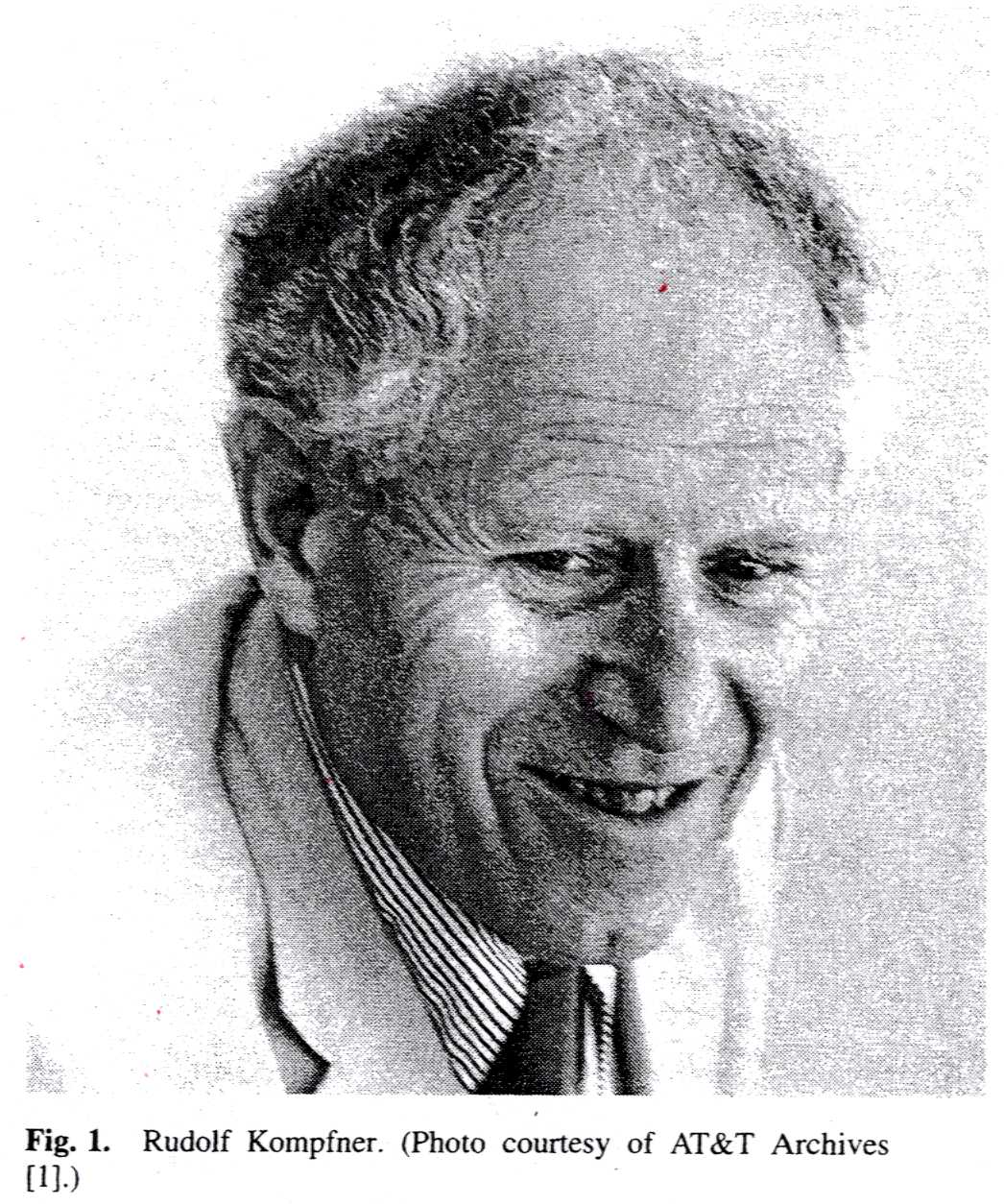
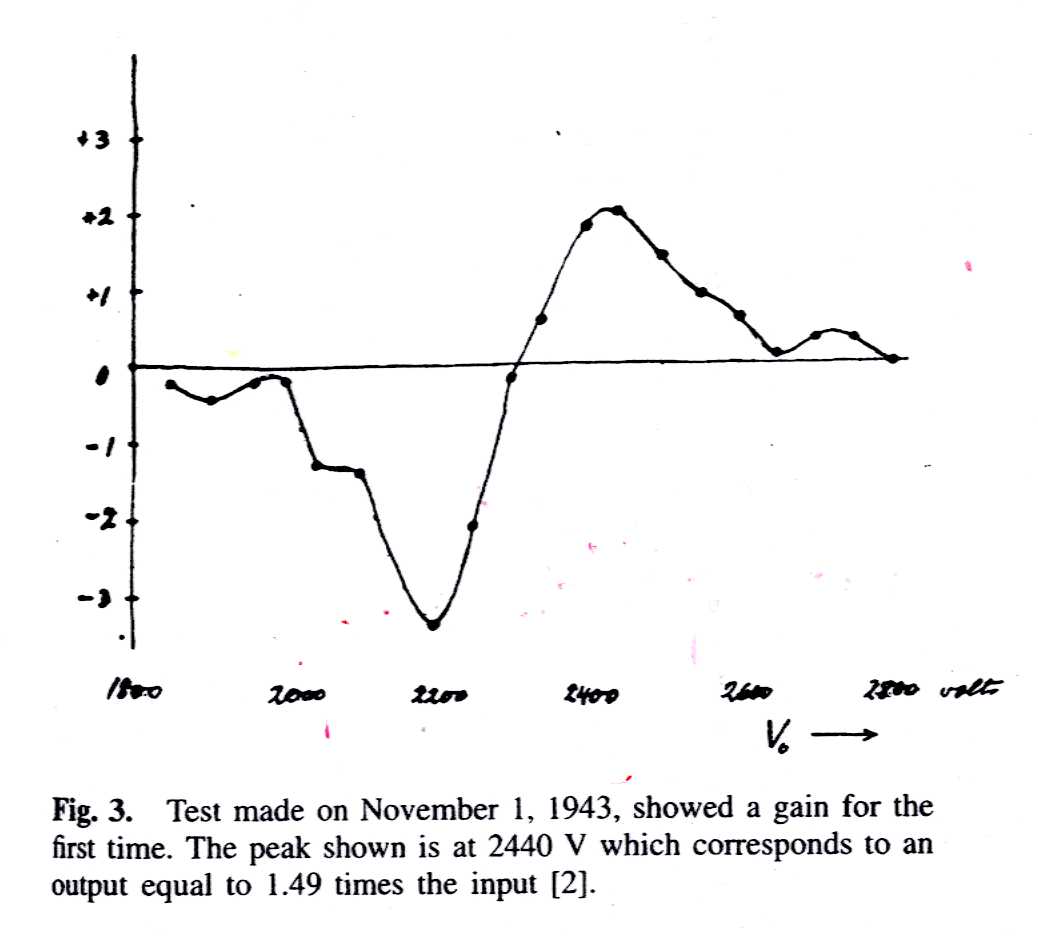
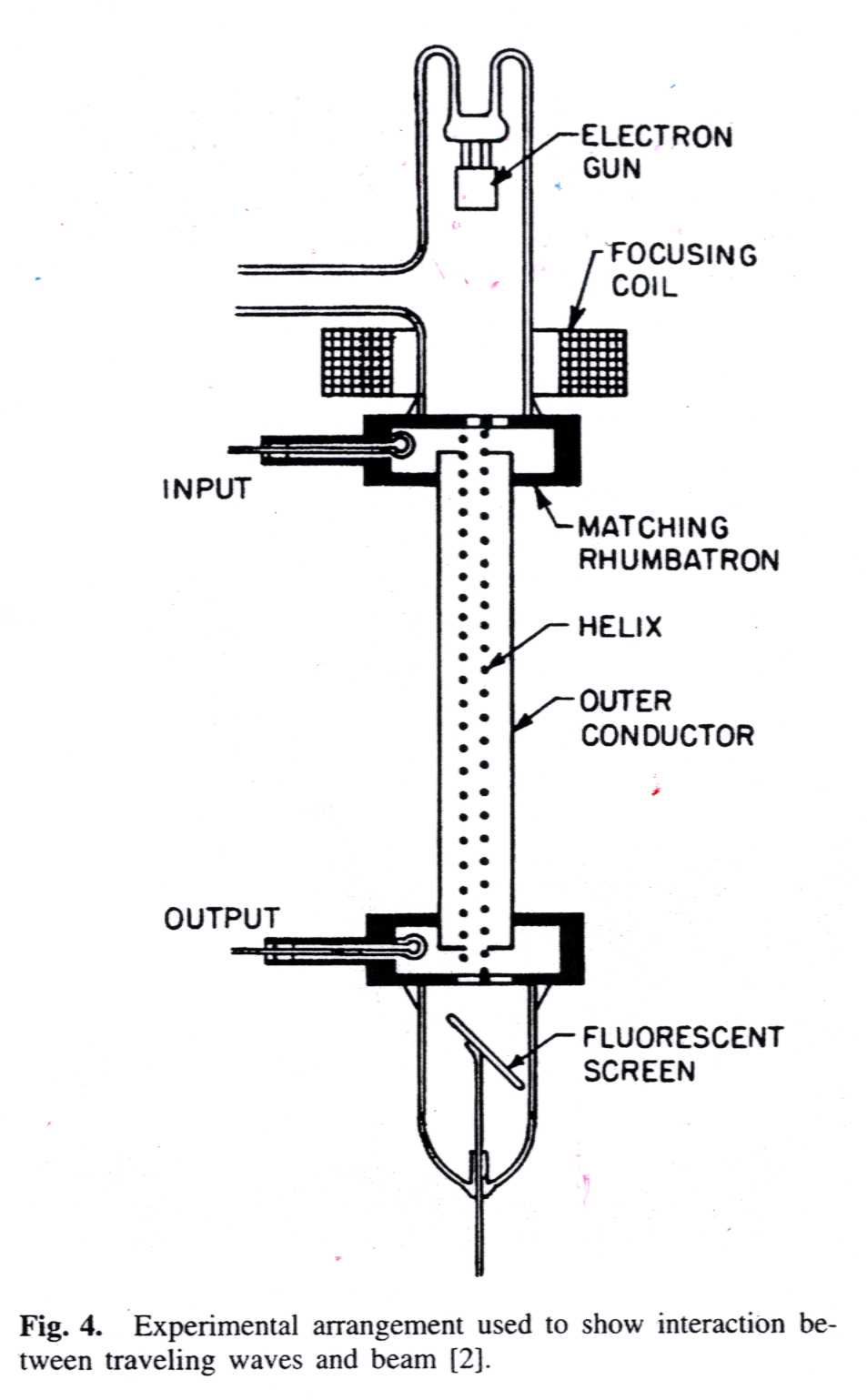
     Fifty years ago this month, the PROCEEDINGS OF  THE RADIO ENGINEERS (IRE) included a paper by Rudolf Kompfner (see Fig. 1) img014.jpgon the traveling-wave tube as a microwave amplifier. At the time he was affiliated with the Clarendon Laboratory of Oxford University in England. He received the IEEE Medal of Honor in 1973 as recognition of having made “a major contribution to worldwide communication through the conception of the traveling-wave tube embodying a new principle of amplification.” He also made significant contributions to the development of communication using earth satellites.
     Kompfner was born in Vienna, Austria, in 1909. He graduated with a degree in architecture from the Technische Hochschule in Vienna in 1933. In 1934, he moved to England, where he (more…)

IEEE NEWS

NEWS from IEEE-USA
2001 L Street, N.W., Suite 700
Washington, DC 20036-4910

IEEE/IEEE-USA’s New Face of Engineering Honored for Technological Innovations Benefiting Women and Children

WASHINGTON (1 March 2011) — Sampathkumar Veeraraghavan was recognized as the IEEE/IEEE-USA’s 2011 New Face of Engineering during National Engineer Week for developing technological solutions that improve the lives of disabled and impoverished women and children in India.Veeraraghavan was one of 14 engineers recognized for this international honor and featured in a full-page ad in USA Today on 21 February: http://www.eweek.org/Site/Engineers/newfaces2011/EWEEK_New_Faces.pdf   I’m humbled by this honor and would like to dedicate it to the disabled children that benefit from our programs,” Veeraraghavan said. “The recognition has motivated me to strongly pursue my passion toward designing engineering solutions to solve global humanitarian issues. In coming years, I will continue working to develop more technological solutions, and will strive hard to bring many more positives changes to the living conditions of people with disabilities.” Engineers Week (EWeek) was celebrated in the United States 20-26 February.Veeraraghavan, 27, is a component design engineer with the Intel Corp. and lives in Hudson, Mass. He earned his master’s degree in electrical engineering from Tufts University in Medford, Mass., in May 2010.After graduating from India’s Anna University with a bachelor’s degree in computer science and engineering in 2005, Veeraraghavan visited a local school for developmentally disabled children in Chennai, India, where he saw children with autism, cerebral palsy, Down syndrome and other disorders. Their needs varied so much that proper therapy was impossible.So he and a group of medical professionals developed the Automated Screening System for Developmental Disorders, a 30-minute screening procedure that assists in the early detection of autism in children as young as 18 months.

According to a 2008 story in The Institute, the procedure “evaluates the child’s fine and gross motor, social, and language skills through (more…)

February 2011 Section Meeting Information

FEBRUARY MEETING
Police radar and laser detectors – state of the art

DATE: Thursday, February 24, 2011
PLACE : Raffel’s – 10160 Reading Road (see below for directions)
TIME : 5:30 p.m. to 6:00 p.m. –  Social Time
               6:00 p.m. to 7:00 p.m. –  Dinner
               7:00 p.m. to 8:30 p.m. –  Presentation
COST:   $12- $15, See information in Reservations

MENU SELECTIONS:   Beef Stroganoff, Chicken Breast with Ham & Cheese, Scalloped Potatoes, Seasoned Green Beans, Tossed Salad, Dinner Rolls and Butter.  There is also a bar available for the purchase of alcoholic drinks.

LOCATION:  Raffel’s is located at 10160 Reading Road, south of Glendale-Milford Road on the east side of Reading. Take I-75 to the Glendale-Milford Rd. Exit, go east on Glendale-Milford Road approximately ¾ of a mile to Reading Rd. and turn right on Reading.

RESERVATIONS:  (Please note New Procedure) We are changing to an on-line reservation system.  Please make reservations for each meeting by going to: https://ieeecincinnati.org/meetings/.  Please click on the appropriate link and complete the reservation.  Beginning with the March 2011 meeting, you will be able to pay on-line.  We encourage you to use the on-line system.  It is a convenience not only to you, but also to our volunteers.  For a limited time, we will be offering a price break for using the on-line system.  $12 On-line reservations for IEEE member and $15 for Guests, Email, Voice Mail, or at the door. 
** If you are having dinner you must use the Menu Selection drop down box to select “Buffet – $12”**
If for some reason you cannot use the on-line reservation system, you may register by emailing your Name, IEEE Member Number (if you wish to receive the IEEE rate), a daytime telephone number, and whether or not you will be having dinner to reservations@ieeecincinnati.org .  For email reservations, you will pay at the door by check or cash (exact change appreciated).
All Reservations must be made by Noon, Tuesday, February 22, 2011 if you plan to attend.
Voice Mail reservations will be eliminated at the end of February 2011.  Voice Mail at 513-629-9380.
PE CREDITS: Depending on the subject matter, attendance at IEEE Cincinnati Section Meetings now qualifies the attendee for Professional Development Hours towards renewal of Professional Engineers Licenses. Required documentation will be available following the meeting!  The Section Meetings also provide a great opportunity to network with fellow engineers in the area.

ABOUT THE MEETING:  
Ever since speed measurement devices were introduced in the late 1960s using microwave (radar) frequencies, devices to detect these transmitters have been sold to the public.  As detectors become more and more capable, police radar and laser guns manufacturers introduce features, and sometimes new frequencies, to make them less detectable and more efficient.  This contest continues today with the widespread use of laser guns, as well as the introduction of ultra-short duration radar pulse guns, referred to as “POP” in the industry.
 
This talk will cover the various technical aspects of this cat-and-mouse game and will review the present state of the art in radar and laser speed measurement and its countermeasures.

ABOUT THE PRESENTER
Marwan Nusair is from Amman, Jordan receiving his BA(Hons) and MA(Hons) from Cambridge University in Natural Sciences (experimental physics), and his M.Sc. from the American University of Beirut (theoretical physics). He went on to receive a Ph.D. in theoretical physics from the University of Cincinnati, and, more importantly, met his wife there.
He spent two years as a postdoctoral research fellow at the University of Toronto Physics Department, followed by two years as an instructor. He then started a business in Cincinnati, designing antennas and feedhorns for home satellite use, and later commercial satellite systems. The business was sold in 1985. He has been a consultant since 1987, doing design work for RF and microwave projects, with the majority being in the police radar detector industry. He is currently busy with radar detector design work. He has published 4 papers in peer-reviewed physics journals and has 7 patents in microwave design and 3 currently pending. He was also a visiting professor of physics at the University of Cincinnati in 1987-88. He is also proud of the fact that an antenna system of his design is in use in a U.S. military project known as “Spider”.
He has served as IEEE Cincinnati Section Secretary and is now Treasurer, and looks forward to helping the Section continue its success, whether as a member or officer.

MEMBERSHIP NEWS

MEMBERSHIP NEWS
If you are interested in upgrading your membership to Senior Member, please contact any member of the Executive Committee.
NEW MEMBERS
The following individuals are IEEE members who are new to our Section:

Daniel Amundson
Joshua Biltz
Ralph Campbell
Waylon Chambless
Eric Cochran
Keith Frikken
John Gebhardt
Greg Harrington
Herman Harrison
Nathan Kincade 
Joe Koetters
Robert Maertz
Dean Oliver
Rodney Phillips
Jim Ramler
Michael Shannon
Antar Vasi
Timothy Waters
Dalric Webb
We wish to welcome these members to the Cincinnati Section!!!

FEBRUARY 2011 HISTORY

Scanning the Past: A History of Electrical Engineering from the Past
Submitted by Marc Bell, Editor

Copyright 1997 IEEE. Reprinted with permission from the IEEE publication, “Scanning the Past” which covers a reprint of an article appearing in the Proceedings of the IEEE Vol. 85, No. 1, January 1997.

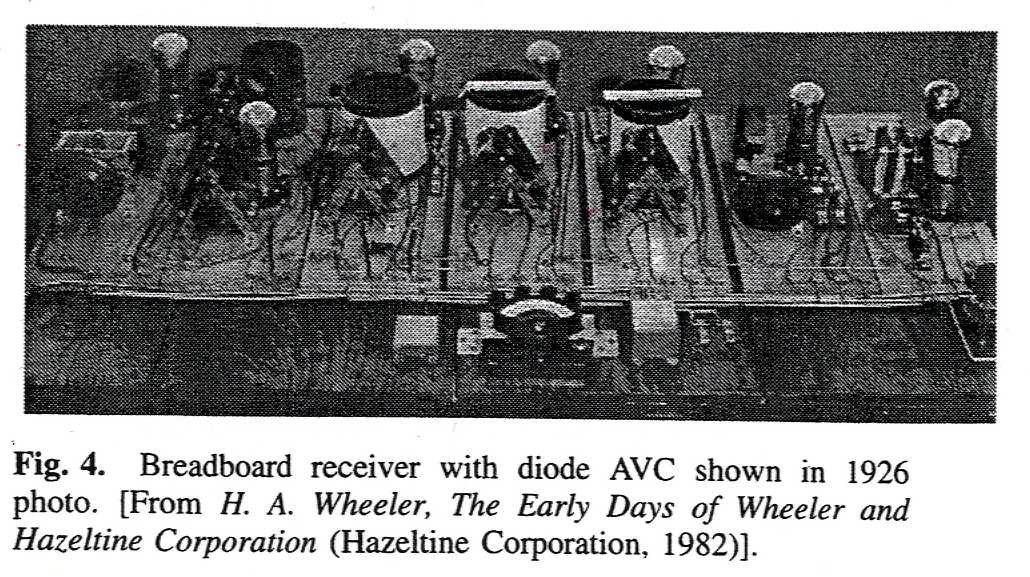
Harold A. Wheeler: A Pioneer in Radio and Television
   img001.jpg

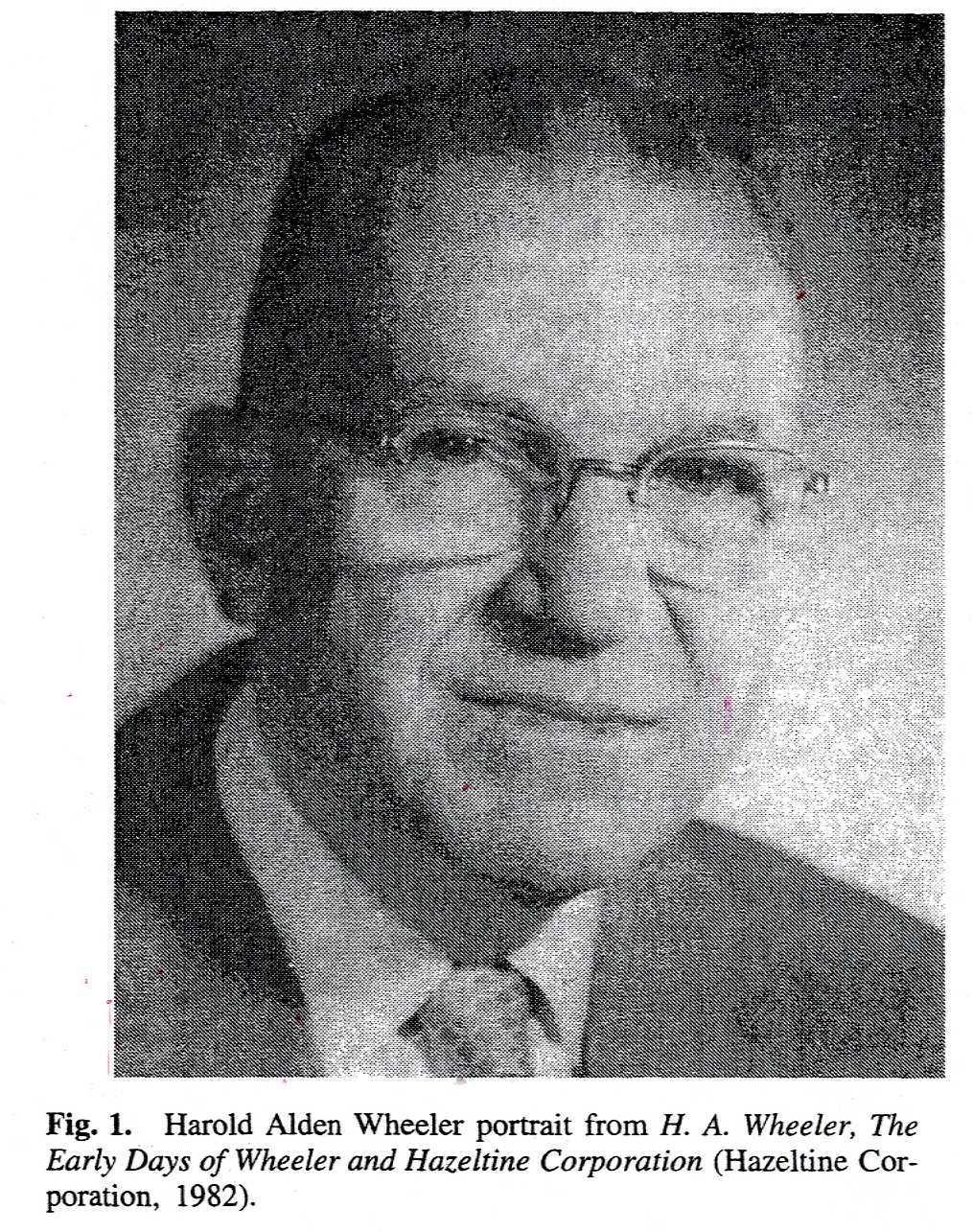
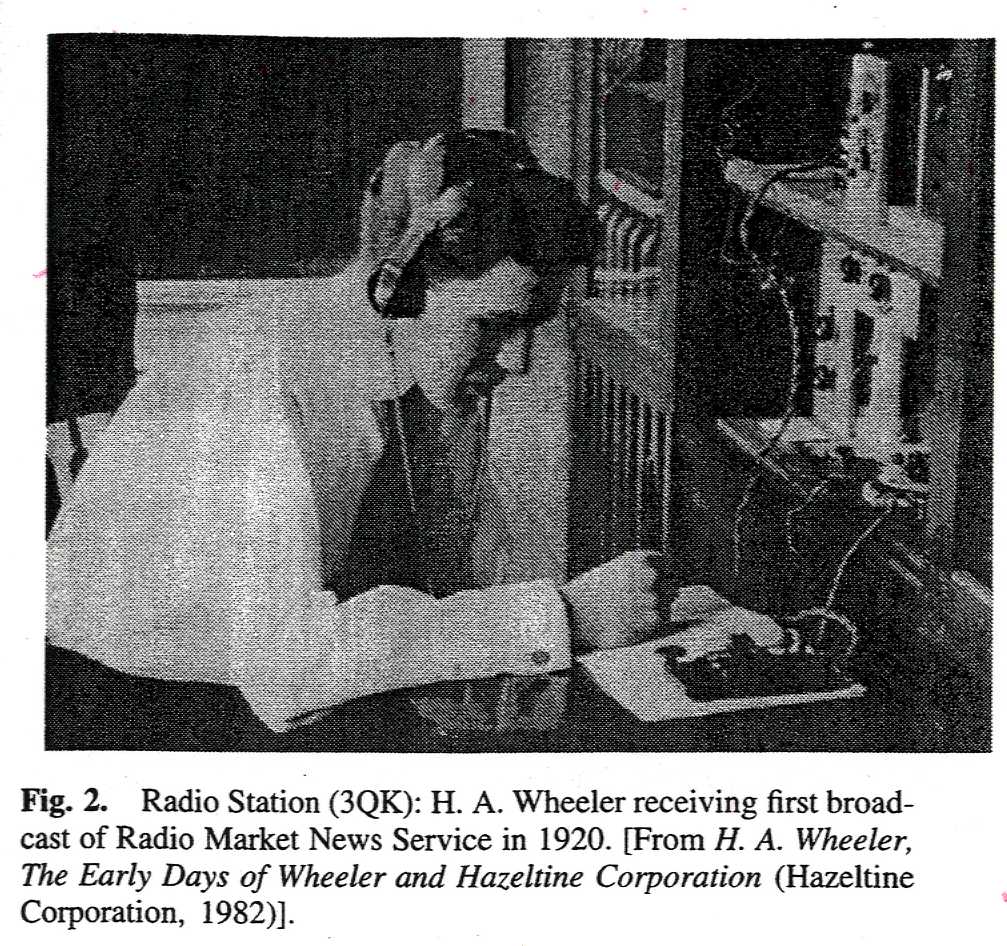
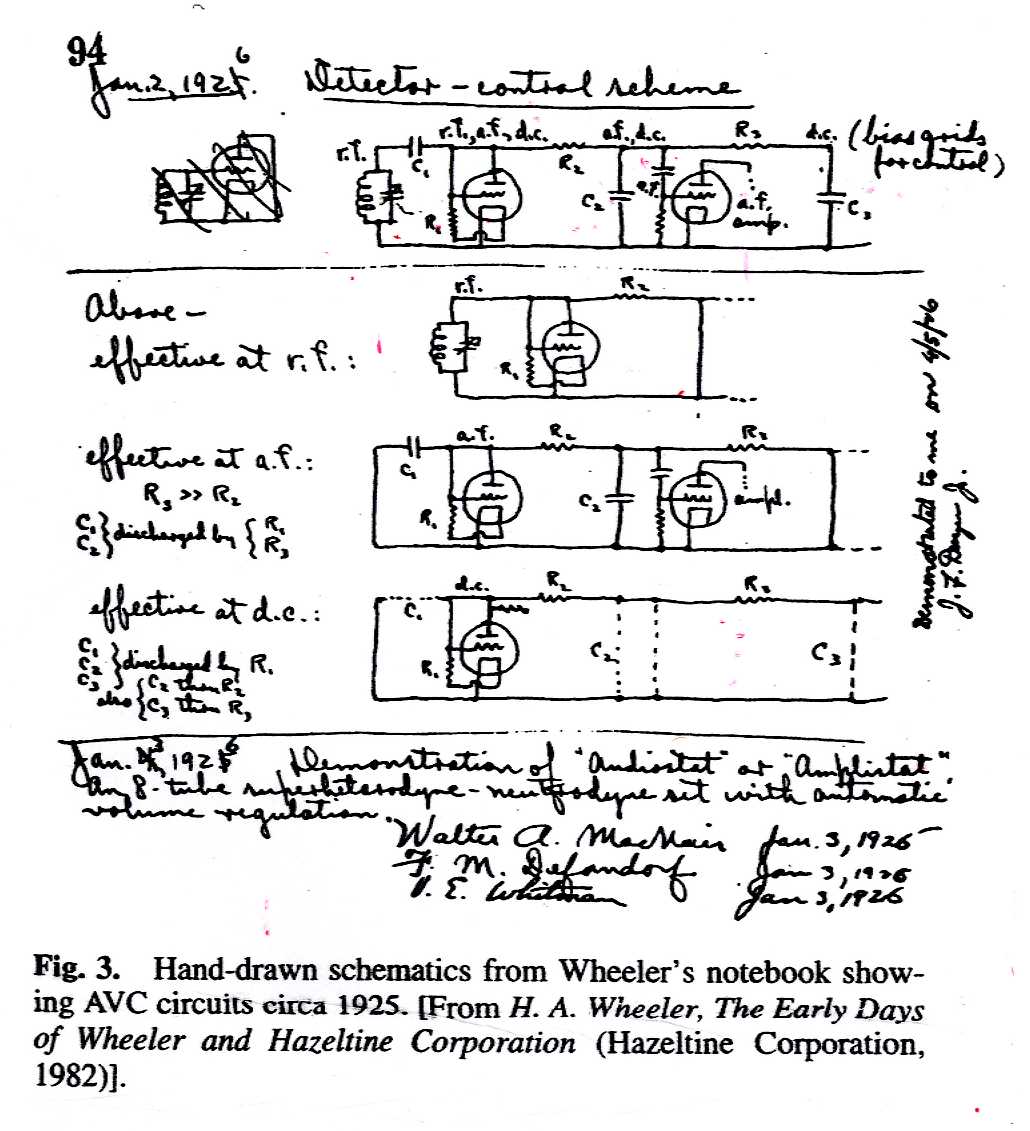
     Fifty-five years ago this month, the PROCEEDINGS OF THE RADIO ENGINEERS (IRE) included a paper on interference between frequency-modulated signals by Harold A. Wheeler (see Fig. 1). Remembered as the inventor  of a much used automatic volume control (AVC) circuit and numerous other technical contributions to communi¬cations engineering, he was a frequent contributor to the PROCEEDINGS during a professional career that spanned much of the 20th century. He served many years as a member of the IRE Board of Editors and was awarded the IEEE Medal of Honor in 1964.
      Wheeler was born in 1905 in Minnesota where his father was an agricultural teacher. The family soon moved to South Dakota where his father taught for four years at South Dakota State College in Brookings. From 1907 to 1916, the Wheeler family lived in Mitchell, SD, where his father worked as manager of a seed company. Wheeler remembered Mitchell as having been “a small town with Hazeltine, inventor of the neutrodyne radio receiver and a professor at the Stevens Institute of Technology. Wheeler worked for Hazeltine during the summer of 1923 and came to (more…)

IEEE NEWS

IEEE NEWS
NEWS from IEEE-USA
2001 L Street, N.W., Suite 700
Washington, DC 20036-4910

A Million Electric Vehicles on the Road by 2015? Austin Workshop to Examine the Challenges and Opportunities

WASHINGTON (26 January 2011) — In last night’s State of the Union address, President Barack Obama called for the United States to “… become the first country to have a million electric vehicles on the road by 2015.”
      The IEEE-USA Electric Vehicles & Personal Transportation Workshop will explore the challenges and opportunities to make that vision a reality. The all-day event, at the Renaissance Austin (Texas) Hotel on Friday 4 March, will feature eight panels and more than 20 technology, industry, academic and policy experts.
     Workshop focus areas include the electric vehicle market; charging infrastructure; plug-in electric vehicles (PEVs) and the electricity business; (more…)